
Why Dating Apps Feel Exhausting—and How AI Matchmaking Is Built for People Who've Been Hurt by Them
Short answer: Mainstream dating apps were built for a very specific kind of dater — high-energy, emotionally unencumbered, and ready to treat romance like a game. For introverts, single parents, widows, and divorcees, that design isn't just uncomfortable. It's actively harmful. InTimid was built for everyone the swipe era left behind.
The People Dating Apps Were Not Built For
Not everyone arriving at a dating app is starting from zero.
Some are introverts who find high-stimulation, high-performance environments draining by nature. Some are single parents juggling school runs and bedtimes, with only a narrow window of emotional energy to invest. Some are widows or widowers stepping back into dating after years — or decades — of partnership, grieving and hopeful at the same time. Some are divorcees who've already been through the emotional cost of a relationship that didn't work, and simply cannot afford another mismatch.
What these groups share isn't a deficiency. It's a higher standard. They need something real — and they need a process that respects that.
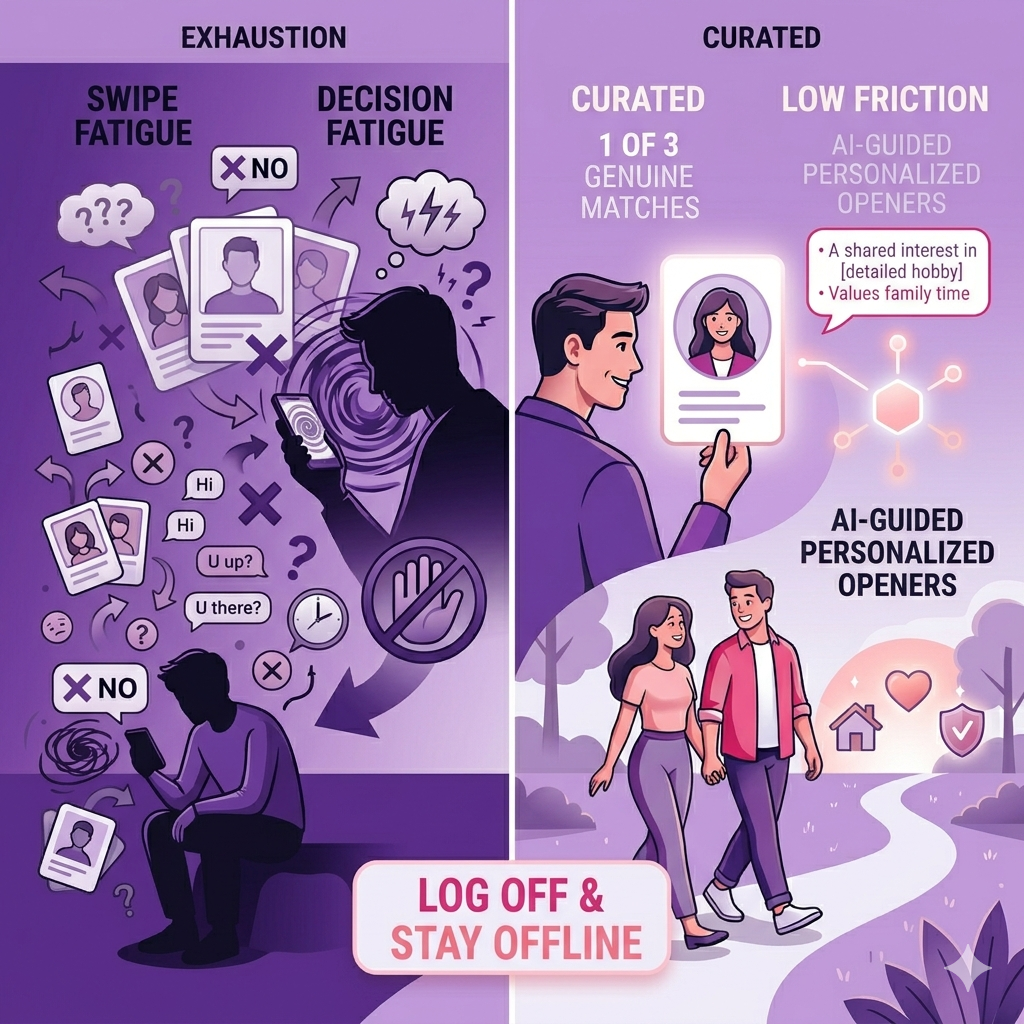
Mainstream swipe apps don't offer that. Research consistently identifies emotional exhaustion, decision fatigue, and anxiety around self-presentation as the primary reasons people disengage from dating platforms. For the people described above, these effects don't just sting — they compound.
Why Mainstream Dating Apps Drain These Users Faster
There are four core mechanisms at play:
1. Volume Over Signal Apps show you hundreds of profiles to maximize engagement time, not relationship success. That is how dating apps keep you single by design. For anyone who processes deliberately — whether due to introversion, the weight of past loss, or the reality of limited free hours — this isn't a feature. It's a cognitive flood. Research on choice overload shows that decisions made under volume pressure are less accurate and less satisfying, not more.
2. Performance Anxiety by Design Profiles demand self-marketing: a punchy bio, the right photos, a witty opener. This format rewards extraversion and emotional lightness. For a widower who hasn't dated in fifteen years, or a single mum who doesn't know how to summarise herself in three sentences, the blank profile screen isn't an opportunity — it's a wall.
3. The First Message Trap Blank message boxes and zero context create disproportionate anxiety for anyone who communicates through depth rather than speed. The pressure to write the perfect opener — clever enough to get a response, casual enough not to seem desperate — stops real connection before it starts.
4. Mismatched Intentions, Wasted Energy Most apps mix people seeking hookups, casual dates, long-term partners, and entertainment in the same pool. For someone re-entering dating after divorce, or raising children, or processing grief — discovering mid-conversation that someone wasn't serious isn't just disappointing. It's depleting in a way that accumulates and eventually stops people from trying altogether.
What Dating Apps Optimize For vs. What Real-Life Daters Actually Need
Mainstream Dating AppsWhat Real-Life Daters Actually NeedHundreds of swipeable profilesA small, curated set of genuinely compatible peopleWrite your own profile bioLet your personality emerge through conversationOpen message box, no contextGuided openers based on real compatibilityMixed intentions, no filteringMatches who want what you wantShare your number to communicateSafe, private in-app callsAnyone can message youMutual consent before any message landsSurface-level checkbox questionsDeep understanding of emotional needs and life context
The pattern is clear: mainstream apps optimize for volume and engagement. People with real lives, real histories, and real emotional stakes need depth and low friction.
Can AI Actually Solve This?
AI can — but only if it's deployed against the right problem.
Most apps use algorithms to keep users scrolling longer, push re-engagement when activity drops, and surface profiles designed to trigger emotional reactions rather than genuine compatibility. This makes dating fatigue worse for everyone, and catastrophic for people who arrived already stretched thin.
The difference is in what the AI is for. Is it working for the app's retention metrics, or for your relationship outcomes?
How InTimid's kAI Is Built Differently
InTimid designed its AI matchmaker, kAI, specifically around how people who are serious about connection actually form relationships — not how the most casual daters swipe through an afternoon.
Deep-Dive Conversations, Not Checkbox Forms kAI onboards users the way a trusted friend or therapist would: through natural conversation covering character traits, lifestyle, emotional needs, relationship goals, and intimacy. There are no boxes to tick, no reductive surface questions. For someone whose needs are nuanced — a single parent whose schedule is complex, a divorcee who knows exactly what went wrong last time, a widow who wants to honour their past while opening to something new — this matters enormously. kAI is built to hold that complexity.
kAI Writes Your Profile No agonising over how to present yourself. kAI builds a character-driven profile on your behalf, drawn from your conversations. Your depth gets represented accurately — not reduced to a tagline you stressed over for an hour.
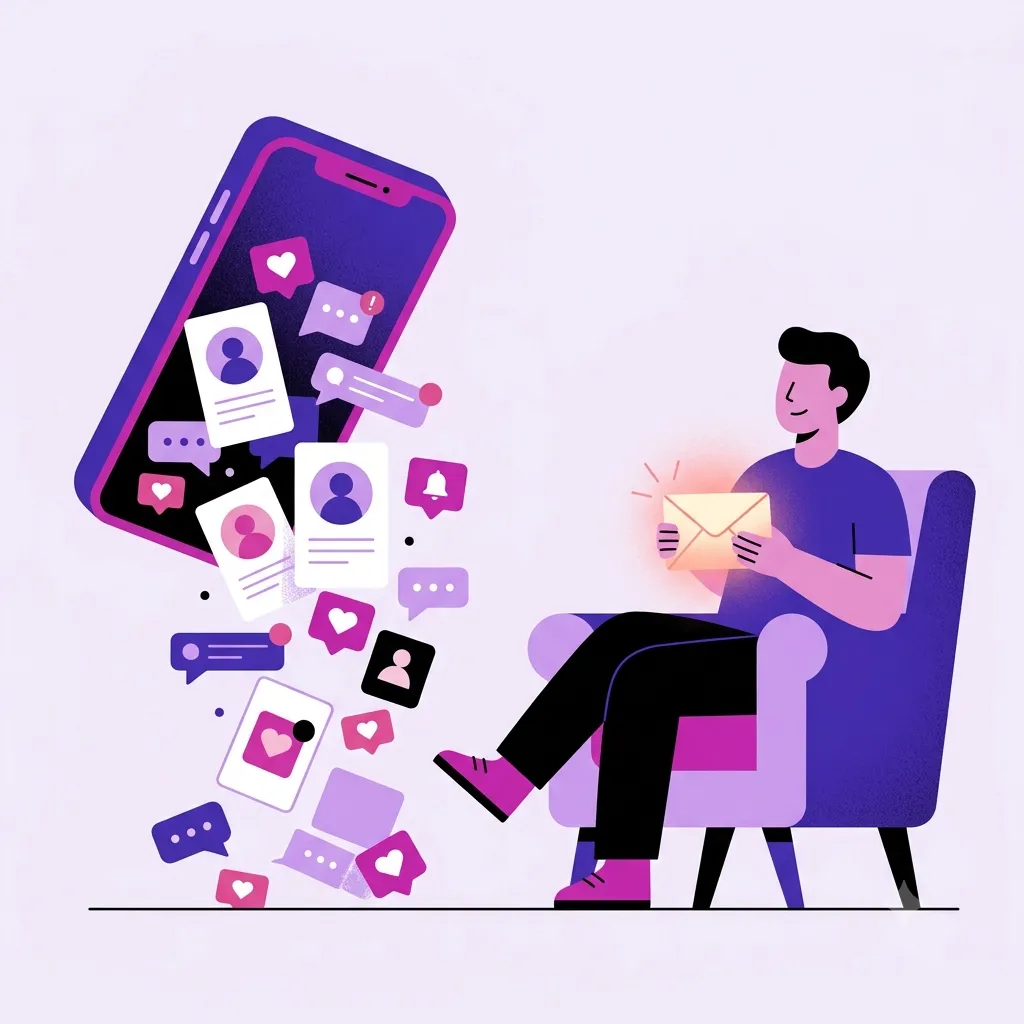
Up to 3 Matches at a Time — No More InTimid caps active matches at three simultaneously. This directly counters choice overload and focuses energy on real conversations rather than endless browsing. For anyone whose time and emotional bandwidth are genuinely limited, three curated introductions is not a constraint — it's a relief.
Personalized Openers, So You're Never Staring at a Blank Screen kAI suggests conversation starters based on your match's actual profile. Breaking the ice doesn't require inspiration on demand — it just requires a platform that does the heavy lifting.
No Phone Numbers. No Personal Details Required. InTimid's built-in voice and video calling means you can hear someone's voice and see their face before sharing a single piece of personal contact information. For single parents especially — cautious about who enters their world — this baseline of privacy is non-negotiable.
Bi-Directional Consent No unsolicited messages. Both parties must consent before a conversation begins. For anyone who finds unexpected social demands stressful, or who simply values control over their own attention, this changes the entire emotional texture of the experience.
Verified Users Only Every InTimid user goes through mandatory verification. No catfishing, no bots, no fakes. The energy you invest in a conversation is going toward a real person — a basic expectation that most apps still fail to guarantee.
Does Lower Volume Actually Lead to Better Outcomes?
The research says yes.
Studies on choice overload in romantic contexts consistently show that moderate option sets — not unlimited ones — lead to higher decision satisfaction, greater commitment to pursuing a match, and lower regret. When you have three good options instead of three hundred mediocre ones, you engage differently. More carefully. More honestly.
For people whose lives demand that kind of intentionality already — who can't afford wasted evenings or misplaced hope — this isn't a soft preference. It's the only approach that makes sense.
The Bottom Line
Dating burnout is not a personal failure. You don't hate dating, you hate dating apps. It's what happens when a high-stimulation, high-performance system gets applied to people who need something quieter, deeper, and more real.
Most apps were built to keep you on them. InTimid was built to help you log off — with someone worth staying offline for.
Sound familiar? The free beta is live. Get in:
Whether you're an introvert who's always found the noise too loud, a single parent who guards your time carefully, a divorcee who knows what you're not willing to repeat, or someone who lost a partner and is tentatively finding your way back — InTimid was built with you in mind.
Questions this article answers:
- Why do dating apps feel worse for introverts?
- Are there dating apps for single parents?
- What are the best dating options for divorcees re-entering dating?
- How can widows and widowers find connection without the pressure of swipe apps?
- What is kAI and how does InTimid use AI for matching?
- How does AI matchmaking work differently from swipe apps?
- Are there alternatives to Tinder and Bumble for serious relationships?