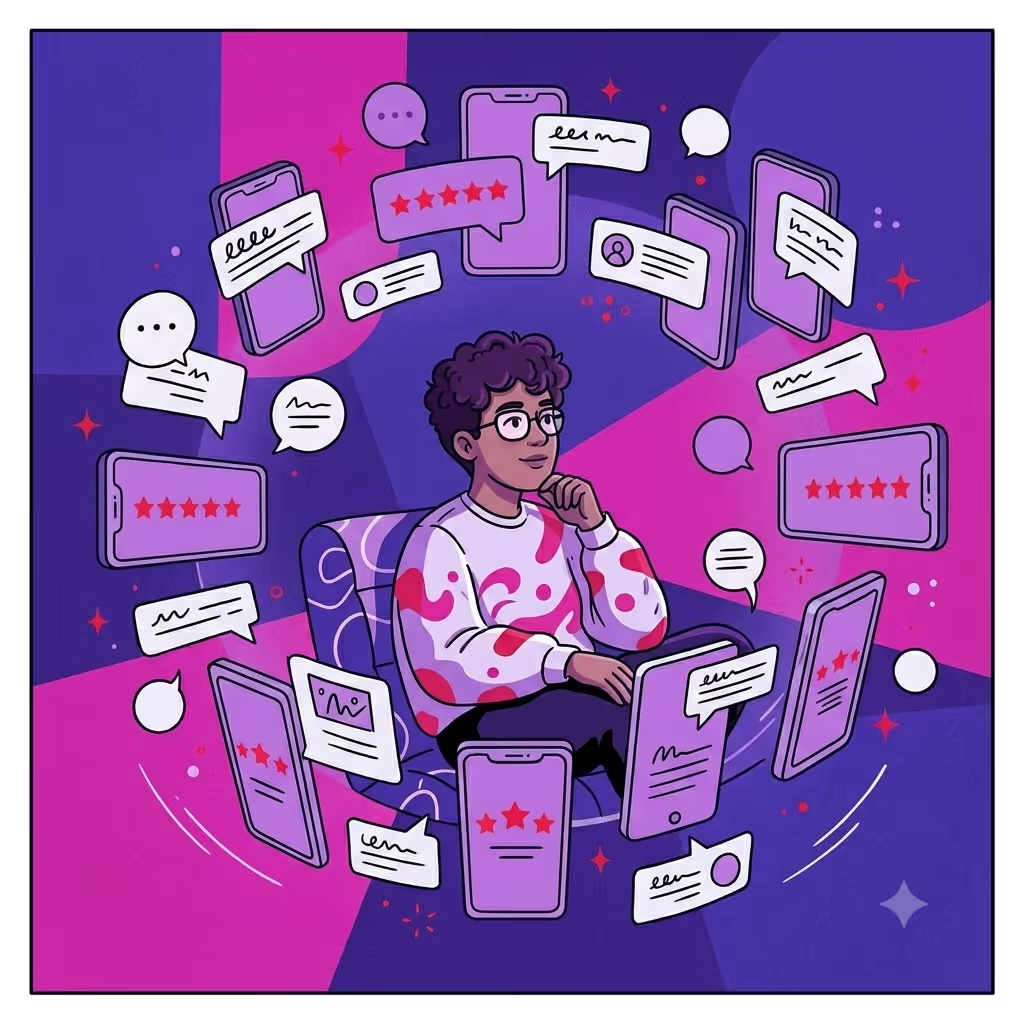
Tinder. Bumble. Hinge. Coffee Meets Bagel. eHarmony. Different apps, different price points, different promises. But scroll through the reviews long enough and something unsettling happens: the complaints stop being about the specific app and start being about something deeper.
The same five problems show up in the 1-star and 2-star reviews of every major dating app on the market. Not occasionally. Consistently. Across millions of users, across years of updates and redesigns and AI feature rollouts.
Here's what they said.
1. "The profiles tell me nothing about who this person actually is."
This is the most consistent complaint across every app, and it makes sense when you think about the format. A few photos. A short bio most people treat as an afterthought. Maybe a prompt or two.
In a 2025 survey by Match.com in partnership with the Kinsey Institute, 61% of singles said they believe dating profiles have become less authentic. Not more -- less. Despite years of app improvements, users feel they know less about a potential match than they did before.
What you learn from a dating app profile: what someone looks like on their best day, whether they can write a clever one-liner, and which three adjectives they chose to describe themselves. What you don't learn: how they handle conflict, what they actually value, whether your communication styles are compatible. The things that determine whether a relationship works.
2. "I matched with someone and then they just disappeared."
Ghosting is the single most cited frustration in dating app reviews -- and it's been that way for years. It doesn't matter which app. Tinder, Hinge, Bumble: the ghost rate is roughly the same.
The reason isn't that people on dating apps are uniquely unkind. It's a design problem. When you've matched with 40 people simultaneously, the social contract around any individual conversation weakens. There's no consequence to disappearing. There's no mutual investment before contact is made.
Apps have tried to solve this with timers (Bumble's 24-hour window), read receipts, and "nudge" features. None of it has fixed the underlying dynamic, because the underlying dynamic is a volume problem, not a feature problem.
3. "Half the profiles are fake."
Fake profiles, bots, and catfishing are documented problems across every major platform. A 2025 Security.org survey found 58% of dating app users worry about AI-generated fake profiles -- a figure that has risen sharply as synthetic image technology improved.
One analysis of 1-to-3-star reviews across the five largest dating apps found that the pattern in negative reviews was remarkably consistent: users warning each other about bots, fake photos, and scam operations that had passed verification. Reviews read less like UX feedback and more like public safety forums.
This isn't a fringe problem. It's structural. Apps that rely on large user numbers to attract advertisers and justify valuations have an incentive to not be too aggressive about removing inactive or fake accounts. The business model and the user experience are in conflict.
4. "I've been on here for two years and I'm exhausted."
The Match.com and Kinsey Institute 2025 survey found that 53% of singles reported dating burnout. Not frustration -- burnout. The kind that makes people delete the app and come back six months later, only to go through the same cycle again.
The revenue numbers for the industry reflect this. Bumble's revenue dropped 7.4% in 2025, with paying users declining 16%. Match Group -- which owns Tinder -- saw revenue growth stall. Tinder lost 600,000 UK users in a single year according to an Ofcom report.
These aren't small numbers. The swipe-based model, dominant for over a decade, is losing users faster than it can replace them.
5. "I paid for premium and it made no difference."
Across every app, paying users report the same experience: the upgrade unlocks more features, but the fundamental quality of matches doesn't improve. You see more profiles. You get more visibility. The people you meet are still the same people, with the same profile depth, the same ghosting patterns, the same disconnection between what a photo shows and who someone actually is.
Hinge is a partial exception here -- its prompt-based profile format requires more from users and the matching model shows results. Hinge's revenue grew 26% in 2025 and 36% of marriages that started on a dating app that year began on Hinge. It works better because it demands more from both sides. But it's still a swipe app at its core, still dependent on photos, still subject to ghosting.
What the Reviews Are Actually Telling Us
The problem isn't any specific app. The problem is the model.
Swipe apps were designed to keep you engaged, not to get you off the app. The matching logic optimizes for volume. The profile format optimizes for speed. The result is a system where you meet a lot of people superficially and connect with almost none of them deeply.
The people leaving those reviews aren't bad at dating. They're frustrated by a design that was never built to help them succeed.
What Dating App Users Say in Interviews
The reviews are public. We also sat down with daters one on one, and the interviews said the same thing with fewer stars attached.
"Right now on Hinge I have 99+ matches. Bumble is over a thousand. Going through all these just takes forever."
Suzie, 34, Seattle. InTimid user research, August 2024.
"That's not good quality matches. It's just kind of like, it's really random."
Michael, 44, London. InTimid user research, August 2024.
Volume without quality is the whole complaint, in the reviews and in person.
What a Different Approach Looks Like
InTimid was built on the premise that the reviews are right.
No swiping. No profile bio. No ghosting. Our AI, kAI, gets to know you through conversation -- the kind of questions that reveal who you actually are, not just what you look like. You only meet someone if you both say yes. Mutual consent before any contact.
Our free beta is live now, starting in California. Get the free beta →
InTimid is AI matchmaking for introverts and people re-entering dating after divorce, loss, or a long relationship. Free beta live now, starting in California.